Words by
Propero
For the past 30 or 40 years, buying an investment property meant hiring a property manager at the same time. Leasing it out to hopefully good tenants and sitting on it. Hoping you didn't hear from the property manager, because that meant something had gone wrong or your owner statement would be reduced that month.
What the fee actually buys
It's no secret that people use property managers because they put it in the too hard basket. They don't think they have the time or the will to deal with it, and they want the peace of mind of knowing it's being looked after. To them, that's worth the 6 to 8% of the weekly rent, and that's absolutely fine. To them I'd say Propero isn't yet for you.
To everyone else, doing the quick maths in their head on what their time is really worth: keep reading.
The average property manager looks after somewhere between 100 and 250 properties. In some cases it's more than 300. At that scale, management is triage: the week goes to whichever properties are on fire, and yours gets thought about when something breaks. Your PM isn't thinking about your property the way you do. Across a rent roll that size, they can't.
The average fee in Australia has sat between 6 and 8% for over 20 years, depending on state and local factors. In that same 20 years, rent has increased 80 to 160% and property prices have skyrocketed. The percentage never moved, but the dollars underneath it roughly doubled. The service didn't.
The parts software already does
Most of the property management industry already runs on software, and not new software. Reminders on lease expiries, rent reviews, move-outs, the reports behind your owner statement: that's 10 to 15 year old automation, and in most offices an assistant or a junior drives it, not the manager whose name is on your agreement. The clerical half of the job left the building years ago. The fee didn't follow it.
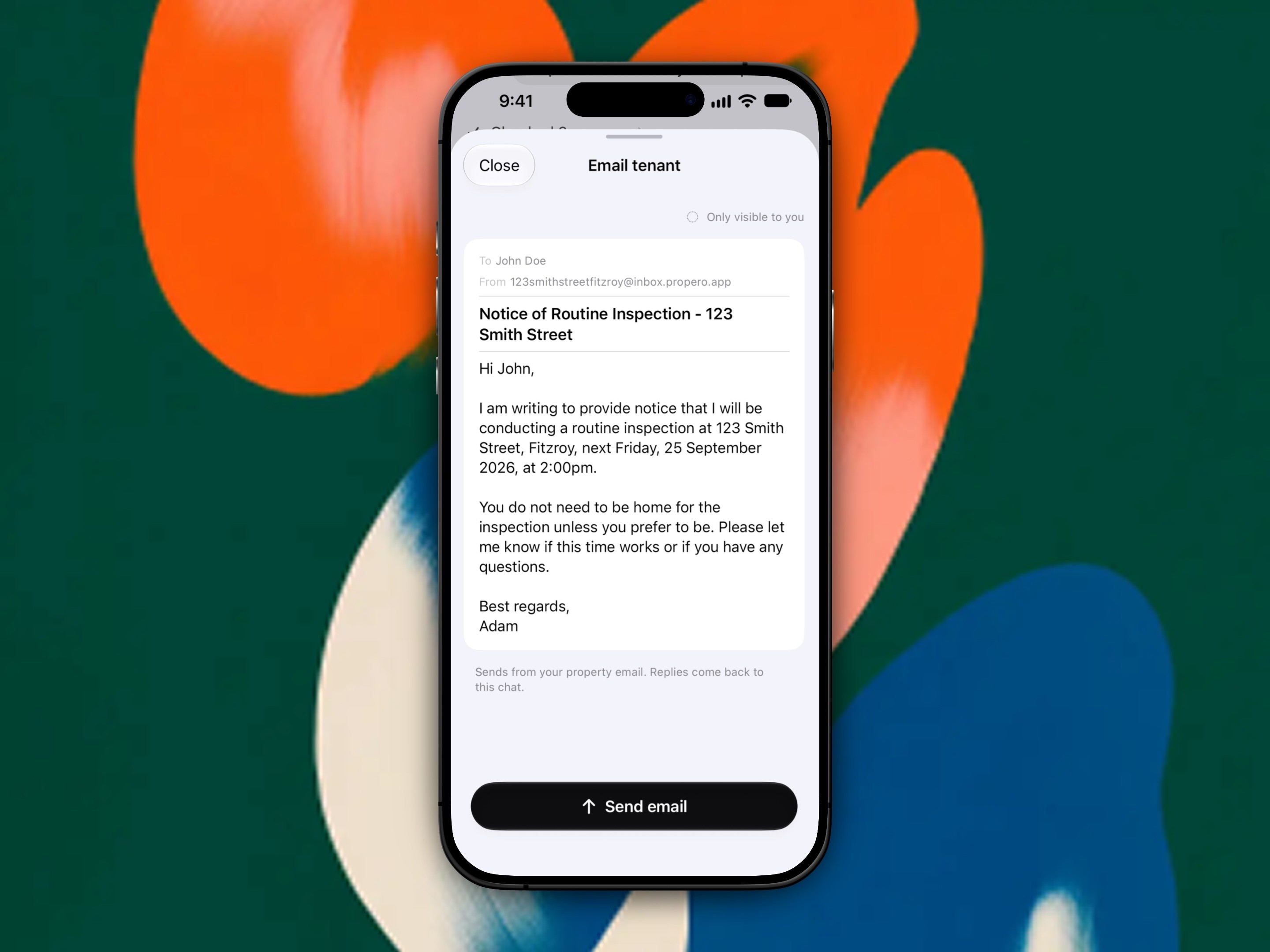
That half of the job is what Propero does, from your phone. It watches the rent land and tells you the moment it doesn't. It keeps the ledger, the receipts and the tax summary. It reminds you when compliance is due and keeps the condition of the property on record. The clerical work still happens, it just doesn't need an office or a percentage of your rent to happen.
The parts that were always yours
Here's the part nobody says out loud: the decisions were never delegated in the first place. Which tenant to accept. Which quote to approve. Whether to renew, and at what rent. Your property manager rings you to ask. You were always the one deciding, they were just the one relaying it. Once you see the job that way, the question isn't whether you can do without the middle layer. It's what the middle layer was for.
Stockbrokers used to be someone you'd call for advice. Now you do it all from your phone.
Who should honestly keep their agent
Some landlords genuinely should keep their agent. If you live interstate or overseas and have nobody local to open a door, an agent is your presence on the ground. If you're running a portfolio big enough to be a second job, a good agent is staff. And if you're in the middle of a dispute that's headed for the tribunal, stay put until it's resolved. Propero isn't trying to win those landlords this year.
This isn't a pitch to become a "self-manager". It's an observation that the job you've been paying for has changed shape, and most of what's left of it was always yours. The admin half now fits in your pocket. The decisions were never anywhere else.